How to Learn German

How to learn German: a structured guide for real progress
Learning German can open professional, academic and personal opportunities across Europe. Many learners start with strong motivation but struggle to stay consistent because they rely on unstructured methods or switch between too many resources.
A clear learning system makes the process more effective. Instead of studying randomly, you build skills step by step, with defined goals and consistent practice.
Why learning German is valuable
German is one of the most important languages in Europe. Germany has one of the strongest economies in the world and plays a central role in industries such as engineering, automotive production and pharmaceuticals.
Learning German can support career development, improve access to international companies and open opportunities for study in German-speaking countries.
It also connects you to a rich cultural and intellectual tradition, including literature, music and scientific research.
Understanding what makes German easier than expected
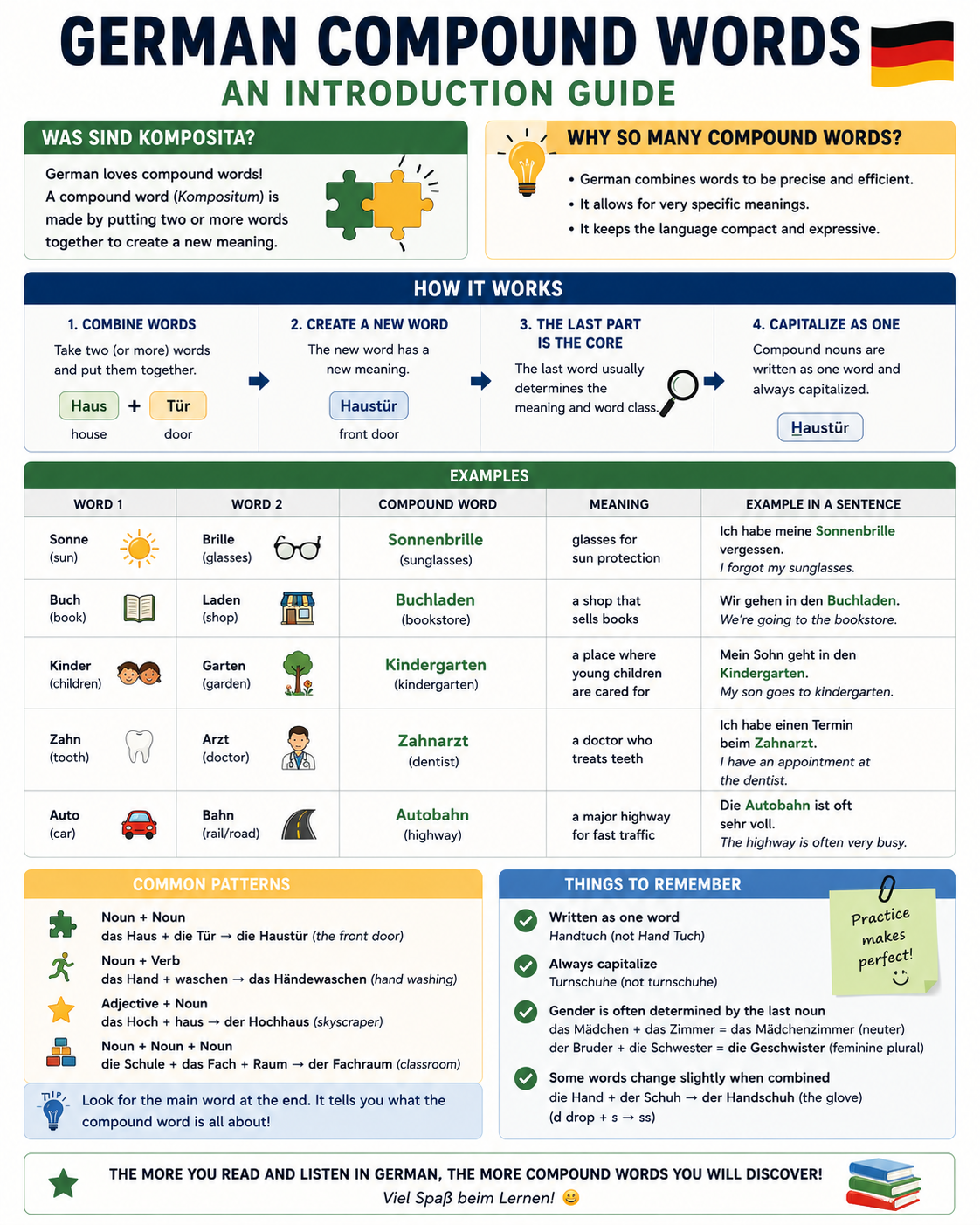
German is often seen as a difficult language, mainly because of grammar and long compound words. However, several aspects make it more structured and predictable than expected.
- Pronunciation is consistent, with most words read exactly as written
- Verb conjugation follows clear and repeatable patterns
- Compound words often combine smaller words with logical meanings
Once these patterns are understood, learners often find that progress becomes faster and more manageable.
Setting clear goals before you start
Without clear goals, learning can feel slow and unfocused. A structured plan helps you stay consistent and measure progress.
A balanced approach includes both short-term and long-term objectives:
- Short-term goals: learning vocabulary daily or practising speaking regularly
- Long-term goals: reaching a CEFR level or handling professional communication
Tracking progress through milestones helps maintain motivation and creates a clear direction.
German language levels and certifications
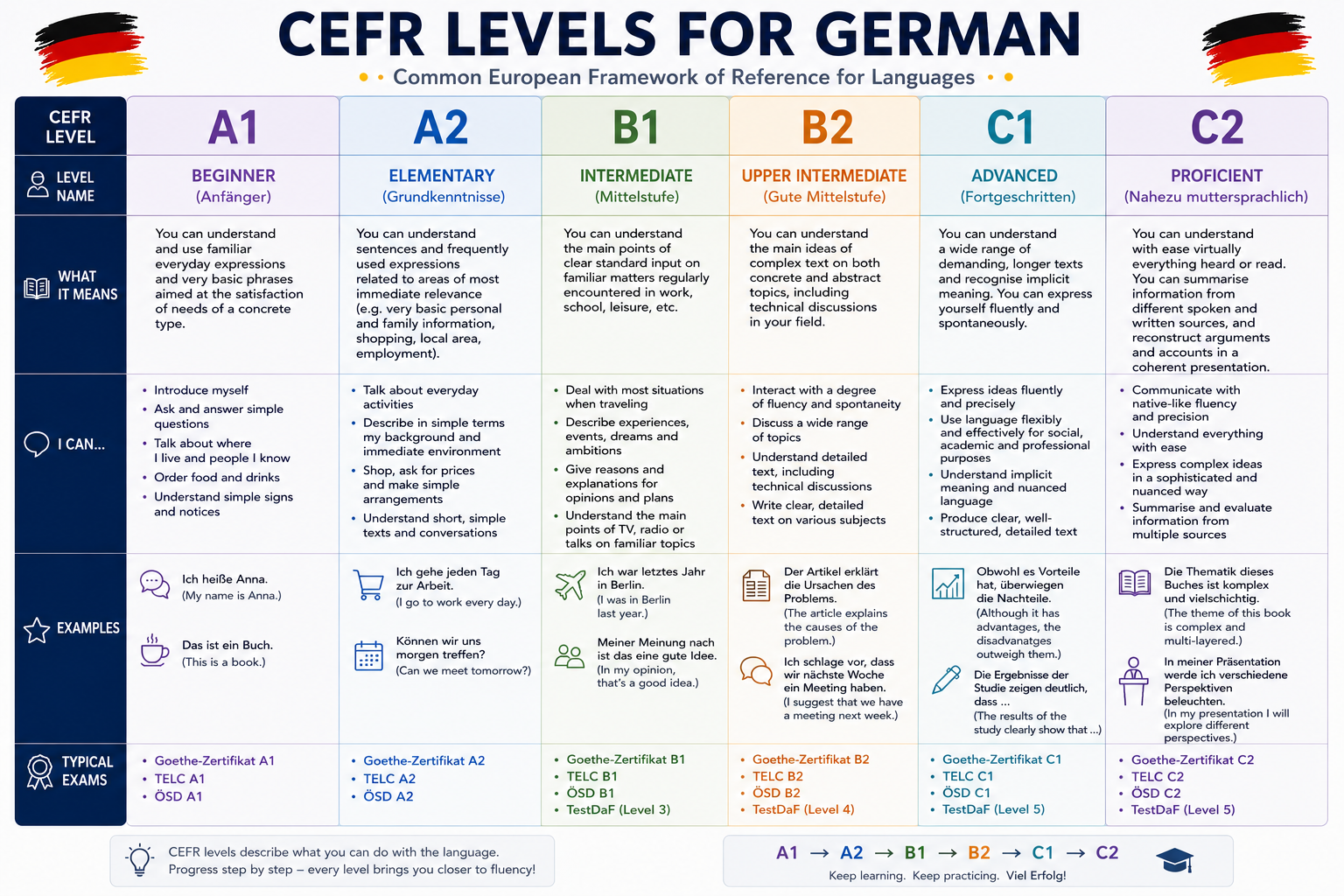
German learning follows the CEFR (Common European Framework of Reference for Languages), which defines six levels from A1 to C2.
At beginner levels (A1–A2), learners focus on basic communication such as introductions and everyday interactions. Intermediate levels (B1–B2) involve independent communication, including workplace situations and expressing opinions.
At advanced levels (C1–C2), learners are expected to communicate fluently and manage complex topics in professional or academic contexts.
The most recognised certifications include:
- Goethe-Zertifikat – widely accepted internationally across all levels
- TestDaF – commonly required for university admission in Germany
- TELC – recognised across Europe for academic and professional use
These certificates follow CEFR standards and provide clear proof of your language level.
Including German in your daily routine
Regular exposure is essential for long-term progress. Learning does not only happen during study sessions, but also through daily interaction with the language.
Practical ways to include German in your routine include watching series such as Dark, Babylon Berlin or How to Sell Drugs Online (Fast), listening to podcasts like Easy German Podcast or Coffee Break German, and following German music artists such as AnnenMayKantereit or Mark Forster.
Reading simple news platforms like Deutsche Welle or Nachrichtenleicht can also help beginners become familiar with vocabulary and sentence structure in real contexts.
Consistent exposure helps you understand natural language patterns and improves long-term retention.
Learning with structure and guidance
Self-study can be effective, but too many resources often create confusion. A structured approach provides clarity and direction.
Working with a teacher helps you follow a clear plan, receive feedback and correct mistakes early. This prevents the repetition of errors and improves efficiency.
Flexible learning formats, especially online lessons, make it easier to integrate German into a busy schedule.
Understanding culture through the language
German learning becomes more engaging when connected to real cultural content. Series, podcasts, music and literature not only improve comprehension, but also help learners understand humour, communication styles and everyday social situations.
Following German-speaking media regularly makes vocabulary easier to remember because learners connect words and expressions to realistic situations instead of isolated exercises.
Cultural immersion also helps learners become more comfortable with pronunciation, rhythm and natural sentence patterns used by native speakers.
Staying consistent and tracking progress
Consistency is one of the most important factors in language learning. Short, regular study sessions are more effective than irregular intensive practice.
- Daily practice, even 15–20 minutes, supports long-term memory
- Regular review prevents forgetting and strengthens knowledge
- Small achievements help maintain motivation
Recognising progress, even in small steps, builds confidence and encourages continued learning.
Starting your German learning journey
Learning German is a long-term process, but results become visible with a structured approach and consistent effort. Setting clear goals, using the right resources and staying engaged with the language are key to success.
With the right system, learning becomes more manageable and progress more predictable. Starting early and building good habits allows you to develop strong communication skills over time.
Learning method
Recommended course duration 12 weeks, about 15 minutes a day.
Self-study
Portal and ebook at your own pace, in office hours or free time.
From €1.50/month
- — Online exercises, digital portal, ebook and PDF downloads
-
- — Play lessons from the portal or the book QR
-
Listen with a parallel translation beside the audio.
- — Instant writing feedback while you practice
-
Personalized feedback on grammar and wording as you write.
Optional conversation classes
One class a week around your work, plus 30 minutes of self-study a day.
From €18/h
- Flexible class schedule
- Guidance of a teacher
- Stay motivated with live practice
- Recommended: 12 live classes
What students say
- 4.6/5
Not flashy, just consistent. The course book and portal follow one line; that matters more than random exercises.
- 4.9/5
Preparing for an exam while working full time. Audio with translation makes revision realistic on short breaks.
- 4.7/5
I use the book on the train and the portal in the evening. English fits around my job without extra planning.
- 4.4/5